The Numbers behind a Plastic Shed: A Cost-per-Year Look at Garden Storage
Most shed buying decisions are made on two numbers: the size and the price tag. Both matter, but neither tells you what the building will actually cost you over its working life. A cheaper shed that needs regular maintenance and wears out quickly can easily cost more per year than a pricier one that sits there quietly for decades.
This article takes a more quantified approach. Using a simple, illustrative model, it compares the lifetime cost of a plastic shed with a timber equivalent, looks at cost per cubic metre of storage, and then examines what the numbers do not capture. The figures used are worked examples chosen to be realistic, not market data, and the point is the method: you can plug in the real prices and assumptions for any shed you are considering.
Setting Up the Comparison
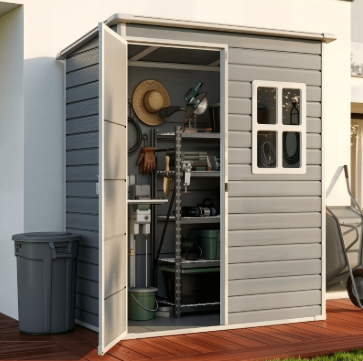
To keep the comparison fair, imagine two sheds of the same approximate footprint, roughly 8 by 6 feet, one made from pressure-treated timber and one from a good-quality plastic resin. Both are placed on the same concrete or paving base, so the base cost can be left out of the comparison.
The model uses four variables: purchase price, recurring maintenance cost, maintenance time, and expected lifespan. From those, we can calculate total cost of ownership and cost per year of use, which is a far more meaningful figure than purchase price alone.
Upfront Cost Is Only One Variable
For the worked example, assume the timber shed costs £600 and the plastic shed costs £750. On that basis alone, the timber shed looks like the better deal by £150, and this is roughly where most buyers stop their analysis.
The issue is that purchase price is a one-off figure, while the other costs recur every year the shed is standing. Over a long enough period, recurring costs almost always outweigh the initial difference in price.
See also: Mutf_In: Baja_Alli_Life_1qcq9rr
Maintenance: The Recurring Line Item
A softwood timber shed typically needs treating with preservative or paint every one to two years. In the model, assume one treatment every two years at £40 for materials, plus roughly four hours of your time. Add an occasional repair allowance, say £50 every five years for felt patches, replacement boards, or hinge repairs.
Over fifteen years, that works out to around £300 in treatment materials and £150 in repairs, a total of £450 in cash, plus approximately 30 hours of labour.
The plastic shed needs cleaning rather than treating. Assume an hour a year and perhaps £10 annually on cleaning products and minor fixings. Over fifteen years that is £150 and 15 hours.
Lifespan and Cost per Year
Lifespan is the variable with the widest range and the biggest effect on the result. A well-maintained timber shed can last twenty years or more, but in practice many are not maintained consistently, and a figure of twelve to fifteen years is more typical. A good-quality plastic shed on a proper base can be expected to last a similar length of time or longer, with far less dependence on owner diligence.
Using fifteen years for both in the example, the timber shed’s total cost is £600 plus £450, or £1,050, which is £70 per year. The plastic shed’s total is £750 plus £150, or £900, which is £60 per year. The plastic building costs £150 more to buy but around £10 a year less to own.
Now change a single assumption. If the timber shed is not treated regularly and fails at ten years rather than fifteen, its annual cost rises to about £90 once the replacement is factored in. If you value your time at even a modest hourly rate, the gap widens further, since the timber shed consumes roughly twice the labour.
Cost per Cubic Metre of Storage
Another useful measure is cost per unit of usable space. Plastic sheds often have slightly thicker walls relative to their external size, and some models have lower eaves, which can reduce usable internal volume. Timber sheds of the same footprint sometimes offer more headroom and wall space for hanging tools.
To calculate this properly, take the internal dimensions from the specification, not the external footprint, multiply length by width by average internal height, and divide the lifetime cost by that volume. It is a small extra step, but it regularly changes which option looks best, particularly when comparing models with different roof shapes.
Sensitivity: Which Assumptions Move the Answer Most
A quick sensitivity check shows which inputs matter most. Changing the purchase price by £100 in either direction shifts the annual cost by less than £7 over fifteen years. Changing the timber shed’s lifespan from fifteen years to ten shifts its annual cost by around £20. Valuing labour at £15 per hour adds roughly £30 a year to the timber shed and £15 a year to the plastic one.
In other words, lifespan and maintenance behaviour dominate the result, while purchase price, the figure most buyers focus on, is the least influential of the major variables. If you know you are unlikely to maintain a timber building consistently, that single fact matters more than any discount.
What the Numbers Leave Out
A cost model is only as good as the variables it includes, and several factors resist easy quantification. Timber is easier to insulate and customise, so if the shed might become a workshop or garden room, its value extends beyond storage. Appearance is subjective but real, and some gardeners will happily pay more for a building they enjoy looking at.
Security, wind resistance, and condensation behaviour also differ between materials and models. These are best treated as qualitative factors that sit alongside the numbers rather than being forced into them.
End of Life
The final part of the lifecycle is disposal. Timber sheds that have been chemically treated need to go to a household waste recycling centre rather than onto a bonfire. Plastic sheds raise their own questions, since different polymers are recycled in different ways and not every centre accepts every type.
For readers interested in the wider numbers behind materials and waste in the UK, WRAP publishes research on plastics, recycling, and resource use. At an individual level, the most effective step is simply to maximise lifespan, since a building that lasts twice as long halves its lifetime material footprint per year.
Running Your Own Numbers
The model above is deliberately simple, and the point is not the specific figures but the approach. For any shed you are considering, note the purchase price, estimate annual maintenance in money and time, make a realistic lifespan assumption, and calculate the cost per year and per cubic metre.
Real product specifications make this much easier. Comparing plastic sheds across a range of sizes and price points, with internal dimensions and materials clearly listed, gives you the inputs you need to run the numbers properly rather than relying on the price tag alone.
Quantified this way, the shed decision becomes much clearer. The cheapest building to buy is not always the cheapest to own, and for many households the modestly higher upfront cost of a well-made plastic shed pays itself back quietly, year after year, in money and in time.