What to Know Before Installing Marble Epoxy Flooring
Choosing a floor involves more than deciding on a color. Property owners must consider how the space will be used, how much maintenance is practical, and whether the selected material can handle everyday conditions.
Decorative epoxy flooring is one option for creating a continuous surface with a marble-inspired appearance. It can be customized to complement different interior styles, but the quality of the result depends on careful planning and correct installation.
Understanding the material, preparation requirements, and limitations before work begins can help prevent costly surprises.
How Marble-Effect Epoxy Creates Its Appearance
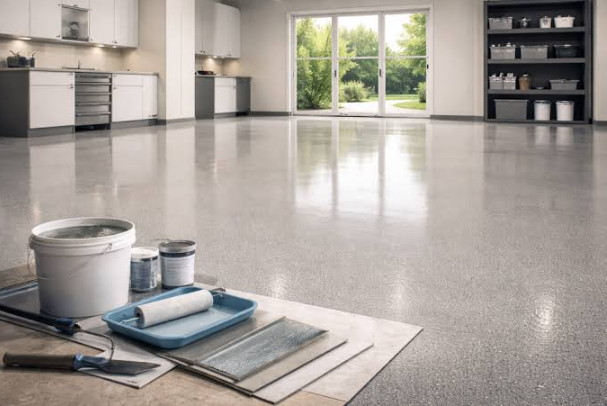
Epoxy coatings are formed when resin and hardener react according to the product’s specified mixing procedure. Decorative versions can incorporate pigments and application techniques that create patterns resembling natural marble.
The design may range from subtle, understated movement to high-contrast veins. Because the pattern is created during installation, the final appearance depends on both the selected colors and the technique used by the installer.
Natural stone has variations created by geological processes, whereas an epoxy design is produced by applying and manipulating decorative materials. Anyone choosing this finish should review physical samples rather than relying only on photographs.
Assess the Floor Before Choosing a Product
The existing floor condition affects which coating system is suitable. Concrete may contain cracks, uneven sections, old adhesive, weak surface layers, or moisture that needs to be addressed.
An installer should inspect the substrate before providing a final specification. Depending on the findings, the preparation may include mechanical grinding, cleaning, crack repair, leveling, or moisture testing.
Applying a coating over a poorly prepared surface can lead to adhesion problems, bubbles, uneven appearance, or premature failure. Preparation should therefore be treated as a core part of the project rather than an optional expense.
Choose a Suitable Coating System
Decorative resin systems can differ in their formulation, thickness, appearance, application method, and performance characteristics. The best choice depends on the room and the expected use.
For example, a lightly used residential room has different demands from a commercial area with frequent foot traffic. Areas exposed to moisture, cleaning chemicals, impact, or heavy loads may need a system specifically designed for those conditions.
A marble epoxy coating is one category to consider when comparing decorative epoxy products. Before purchasing, buyers should check the manufacturer’s technical data and confirm the system’s suitability for the substrate and intended environment.
They should also verify which primer, base coat, decorative layer, and protective topcoat are required. Products from different systems should not be combined without confirmation that they are compatible.
Plan the Design Before Application
A marble-inspired finish can change the character of a room. Lighter colors may create an open appearance, while darker shades and pronounced patterns can provide a stronger visual statement.
The design should work with the space’s lighting, walls, furniture, and overall interior style. Large floor areas can look different from small samples, so it is useful to review a sample board before approving the final design.
The installer and property owner should agree on the main colors, pattern intensity, gloss level, and any decorative details. This reduces the risk of disagreement once the coating has cured.
Understand the Installation Process
Although the exact method varies by product, an epoxy flooring project generally involves substrate preparation, priming where specified, application of the coating layers, creation of the decorative effect, and curing.
Correct mixing is essential. Incorrect proportions or inadequate mixing can affect curing and final performance. Temperature and humidity may also influence the working time and finish.
The installer should use the product’s instructions for mixing, application thickness, recoat intervals, and environmental limits. Work should be planned so that each stage can be completed within the specified working time.
The floor should remain protected during curing. Dust, debris, foot traffic, or moving furniture too soon can damage the finished surface.
Think About Safety and Slip Resistance
A decorative floor must be appropriate for the people who use it and the conditions in the room. Gloss level alone does not determine whether a floor is safe.
Where water or other liquids may be present, the required slip resistance should be assessed for the intended application. A compatible textured finish or another specified treatment may be needed.
During installation, the work area should be ventilated as required by the product instructions. Installers should use the specified protective equipment and follow the manufacturer’s safety guidance.
Maintain the Floor Correctly
Routine cleaning helps preserve the appearance of an epoxy finish. The correct method depends on the product, surface texture, and type of contamination.
Property owners should use cleaning products approved or recommended for the coating. Abrasive tools, harsh chemicals, and dragging heavy furniture across the surface may cause damage.
If a scratch, chip, or localized defect appears, the repair method should be confirmed with the coating supplier or installer. The appearance of a repair may differ from the original finish, particularly if the floor has a complex decorative pattern.
Compare the Complete Project Cost
The overall cost includes more than the coating material. Surface repairs, moisture treatment, labor, decorative complexity, protective layers, and site preparation can all influence the final price.
A detailed quotation should explain which stages are included and identify any assumptions about the existing floor. Buyers should also ask about curing times, maintenance requirements, warranty conditions, and limitations on use.
Comparing quotations on the same scope of work makes it easier to assess value and avoid unexpected charges.
Conclusion
Marble-effect epoxy flooring can provide a distinctive interior finish when the coating system is selected and installed correctly. Its long-term performance depends on substrate preparation, compatible materials, controlled application, appropriate curing, and regular maintenance.
By planning the design, checking technical requirements, and comparing the complete installation cost, property owners can make a more informed decision about whether this flooring option is suitable for their space.