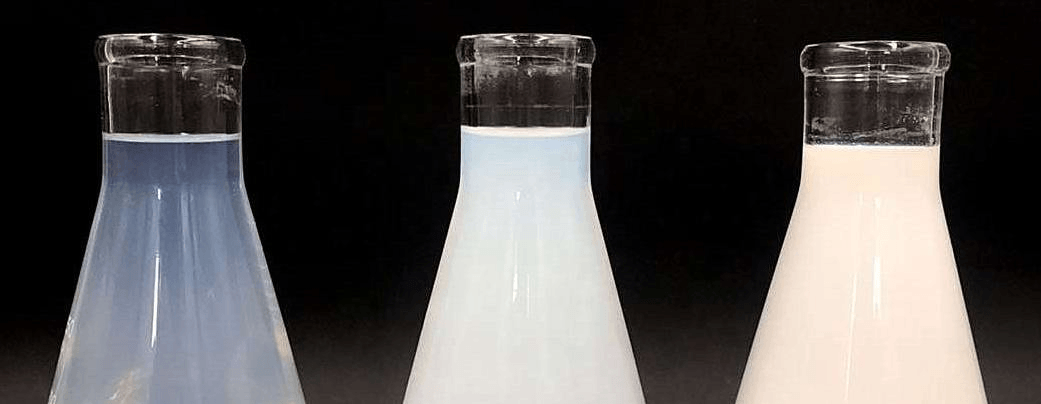
Exploring Silica Sols for Advanced Industrial Formulations
Many industrial processes require finely controlled inorganic materials that can be incorporated into liquid formulations. Silica sols provide one approach because they contain very small silica particles distributed within a liquid medium.
Their physical and chemical characteristics make them relevant to several fields, including coatings, binders, investment casting, refractories, polishing, construction materials, and specialty chemical processing.
However, selecting a suitable product requires an understanding of both the silica particles and the liquid dispersion in which they are supplied.
Read Also: AI Business Solutions: Benefits, Applications, and Future Trends
What Is a Silica Sol?
A silica sol is a stable liquid dispersion containing very fine amorphous silica particles.
The particles are small enough to remain dispersed under appropriate conditions rather than rapidly settling.
The properties of a silica sol depend on particle size, concentration, pH, surface characteristics, and the chemistry of the surrounding liquid.
These variables allow manufacturers to select different grades according to their processing and performance requirements.
Why Particle Size Is Important
Particle size influences surface area and interaction with other components.
Smaller particles generally provide greater surface area per unit mass. This can increase the number of contact points between silica and a surrounding binder or substrate.
However, very fine particles can also influence viscosity and dispersion stability.
Therefore, particle size should always be selected according to the application rather than treated as an independent measure of quality.
Common Industrial Uses
Silica sols are used or investigated across several industrial areas.
In investment casting, silica-based binders can be used to form ceramic shells around patterns.
In refractory systems, silica can contribute to binder formulations designed for high-temperature environments.
In coatings, silica dispersions may be considered for surface and mechanical property modification.
Other areas include polishing compounds, paper processing, textiles, catalysts, and construction-related materials.
Each application requires its own formulation and testing strategy.
Formulation Compatibility
Compatibility is a critical consideration.
A silica sol must interact appropriately with other ingredients in the formulation. Changes in pH, ionic strength, or chemical composition can sometimes influence dispersion stability.
Before full-scale production, manufacturers should therefore perform compatibility trials.
These trials can reveal whether the silica remains stable after mixing with the other components.
Storage Considerations
Because silica sols are liquid dispersions, storage conditions are important.
Temperature extremes can influence stability, viscosity, or other physical characteristics.
Containers should be appropriate for the product, and manufacturers should follow recommended storage periods.
Proper inventory management also helps ensure that older material is used appropriately before its recommended shelf life is exceeded.
Processing Advantages
Liquid dispersions can offer practical advantages in manufacturing.
Instead of handling dry powder, operators can add a pre-dispersed material directly to certain formulations.
This may simplify ingredient incorporation and reduce some dust associated with dry powder handling.
However, production systems still need suitable mixing and dosing procedures to maintain consistency.
Quality Control
A reliable silica sol should have consistent properties from batch to batch.
Manufacturers may monitor characteristics such as solids content, pH, particle size, viscosity, and appearance.
The appropriate specification depends on the application.
For a specialized process, even small deviations may affect downstream behavior, so quality requirements should be established before production begins.
Selecting the Appropriate Product
When comparing silica sols, manufacturers should consider:
- Particle size
- Solids content
- pH
- Viscosity
- Surface characteristics
- Stability
- Compatibility
- Packaging
- Storage requirements
These factors should be considered together.
A material with the right particle size may still be unsuitable if its pH or concentration conflicts with the existing formulation.
Manufacturers researching liquid silica solutions can examine nano silica sol supplier information as part of the process of identifying suitable materials.
Laboratory Evaluation
Before commercial implementation, a small-scale trial is recommended.
The trial should reproduce the intended production process as closely as practical.
Researchers can then measure processing behavior and final performance.
If the results are promising, pilot-scale testing can be performed before full production.
This approach reduces the risk of discovering major compatibility problems after a material has already been introduced into manufacturing.
Frequently Asked Questions
1. What is a silica sol used for?
It can be used in applications such as binders, coatings, investment casting, refractories, polishing, and other industrial formulations.
2. What determines the stability of a silica sol?
Particle size, surface chemistry, pH, concentration, temperature, and interactions with other chemicals can all affect stability.
3. Why should silica sols be tested before production?
Testing shows how the material behaves within the customer’s actual formulation and processing conditions, helping identify compatibility or stability issues early.
Conclusion
Liquid silica dispersions offer manufacturers a flexible way to incorporate fine inorganic particles into industrial formulations. Their performance depends on particle characteristics, concentration, surface chemistry, and the surrounding chemical environment.
Careful product selection and application-specific testing can help companies identify suitable materials while maintaining consistent processing and final-product quality.