Monocrystalline: Edinburgh’s Best Solar Choice
Edinburgh homeowners researching solar energy quickly encounter a confusing array of panel types, each claiming various advantages. Manufacturers tout different technologies, installers recommend competing products, and online forums overflow with conflicting opinions. After installing hundreds of systems across the city, companies like Solar Panels Edinburgh consistently recommend monocrystalline technology for most residential properties. The reasoning comes down to simple physics, local climate conditions, and the reality of Edinburgh’s housing stock.
This isn’t about dismissing alternatives entirely. Polycrystalline and thin-film technologies serve specific purposes in commercial and specialised applications. For typical Edinburgh homes, however, monocrystalline panels deliver measurably better performance, reliability, and long-term value. Understanding why requires examining how different panel technologies respond to the capital’s specific conditions.
Understanding the Three Main Panel Types
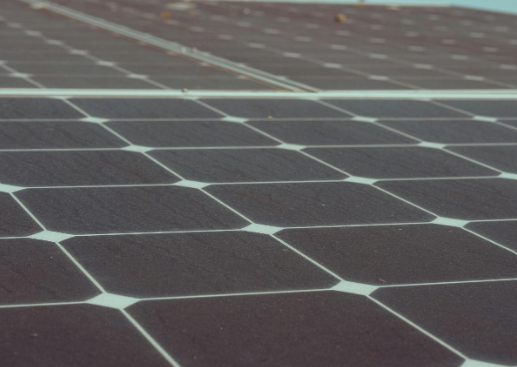
Monocrystalline panels use silicon crystals grown as a single, continuous structure. This uniform molecular alignment allows electrons to flow efficiently, achieving 20-22% efficiency with their characteristic all-black appearance. The manufacturing process is more energy-intensive, but produces the most efficient commercially available solar cells for residential use.
Polycrystalline panels use silicon fragments melted together, creating cells with multiple crystal boundaries. This reduces efficiency to 15-17% as electrons scatter slightly when crossing these boundaries. The distinctive blue, mottled finish makes them easily identifiable, and lower manufacturing costs translate to reduced upfront pricing.
Thin-film panels deposit semiconductor materials onto glass or metal backing, creating lightweight, flexible panels. They rarely exceed 12-14% efficiency, requiring substantially more roof area for equivalent output. Their primary advantages lie in specific applications where weight or flexibility matters more than efficiency.
Edinburgh’s Climate and Light Conditions
The capital receives approximately 1,340-1,400 hours of sunshine annually, with summer delivering long, intense days and winter bringing short days with frequent cloud cover and occasional haar rolling in from the Firth of Forth. This creates specific demands: panels must perform during extended periods of diffuse light and extract maximum energy from limited winter sunshine.
Monocrystalline cells excel here. Their superior efficiency generates meaningful electricity even when light intensity drops. During Edinburgh’s overcast autumn and winter, the difference between 20% and 15% efficiency translates directly into kilowatt-hours. The technology also captures low-angle sunlight better. At 56 degrees north latitude, Edinburgh’s winter sun barely reaches 11 degrees above the horizon at midday. Monocrystalline panels convert this oblique light more effectively, maintaining output when household consumption peaks.
Space Constraints on Edinburgh Properties
Walk through Stockbridge, Morningside, or Newington and you’ll notice Edinburgh’s typical residential architecture: Georgian townhouses, Victorian and Edwardian terraces, 1930s semi-detached homes, and post-war housing estates. These properties share a common challenge: limited south-facing roof area.
A typical Edinburgh terraced home might offer 20-25 square metres of suitable roof space. Installing a 4 kilowatt system using polycrystalline panels requires approximately 26-28 square metres, often exceeding available area once chimneys, skylights, and shade from neighbouring properties are accounted for. The same 4 kilowatt capacity using monocrystalline technology needs just 20-22 square metres.
This space efficiency matters enormously. Many Edinburgh properties that can’t accommodate a meaningful polycrystalline array can fit a properly sized monocrystalline system, making the difference between viable solar economics and an undersized installation. The compact footprint also provides installation flexibility, allowing fitters to avoid problematic roof sections and position panels optimally for year-round performance.
Temperature Performance and Longevity
Solar panels produce less electricity as they heat up. Polycrystalline panels lose 0.45-0.50% output for each degree above 25°C, while monocrystalline panels lose only 0.35-0.40%. During Edinburgh’s summer days when panels reach 50-60°C, this translates to 2-4% additional output from monocrystalline technology.
Quality monocrystalline panels operate for 30-40 years with 25-year warranties. They degrade at 0.3-0.5% annually compared to polycrystalline’s 0.5-0.8%. After 25 years, monocrystalline systems produce 87-92% of original output versus 80-87% for polycrystalline, meaning thousands of additional kilowatt-hours over the system’s lifetime.
Aesthetic Considerations
Edinburgh’s conservation areas and UNESCO World Heritage status make visual appearance particularly important. Planning authorities scrutinise installations on properties within the Old Town, New Town, and other protected zones. Monocrystalline panels’ uniform black appearance blends naturally with slate and dark tile roofs, creating cleaner visual lines than polycrystalline’s mottled blue finish. This consideration becomes especially relevant for Georgian and Victorian properties where maintaining the city’s architectural character matters.
Cost-Benefit Analysis for Edinburgh
Monocrystalline panels cost approximately 10-15% more than equivalent polycrystalline capacity. For a typical 4 kilowatt residential system, this premium might add £400-600 to installation costs.
However, three factors offset this expense. First, higher efficiency means fewer panels, reducing labour, mounting hardware, and electrical components, recovering £150-250 of the premium. Second, superior space efficiency enables proper system sizing where polycrystalline limitations would force undersized arrays. A 3 kilowatt polycrystalline system versus a 4 kilowatt monocrystalline system delivers £200-300 less annual savings, extending payback periods significantly. Third, extended performance life and slower degradation increase total electricity generation by 8-12% over 25 years, adding £1,200-1,800 to lifetime savings and far exceeding the initial cost premium.
When Polycrystalline Makes Sense
Large commercial installations with abundant roof space can benefit from polycrystalline’s lower cost. For most Edinburgh residential properties, however, monocrystalline delivers better performance, longer life, and superior economics.
The Practical Recommendation
Edinburgh’s climate, housing architecture, and typical consumption patterns favour monocrystalline technology. The panels extract more energy from limited sunshine, fit constrained roof spaces, maintain performance over decades, and deliver better financial returns. Edinburgh homeowners should evaluate proposals on total expected generation and lifetime savings, not just initial cost. By these measures, monocrystalline consistently emerges as the optimal choice for residential installations across the city.