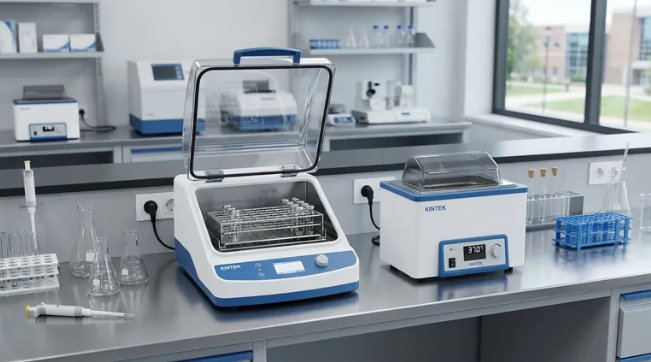
Building an Effective Temperature Testing Process for the Laboratory
Temperature can influence the performance, durability, and reliability of many products and materials. For this reason, controlled environmental testing is an important part of research and product development.
A small temperature test system can provide a practical environment for controlled experiments when the samples are relatively small and laboratory space is limited. However, successful testing involves more than simply placing a sample inside a chamber. The testing process itself must be carefully planned.
Define the Testing Objective
Every environmental test should begin with a clear objective.
Researchers may want to determine how a material reacts to temperature changes, evaluate a component’s performance, or compare two products under identical conditions.
Defining the objective helps determine the appropriate temperature profile, exposure duration, sample arrangement, and measurement method.
Without a clear objective, it can be difficult to determine which test conditions are relevant.
See also: disquantified
Establish Test Conditions
Once the objective is established, researchers should define the environmental conditions required for the test.
These may include target temperatures, temperature changes, exposure duration, and transition rates where relevant.
The selected conditions should reflect the purpose of the experiment. Testing conditions that are unnecessarily extreme may not provide useful information if they do not correspond to the intended application.
Select Appropriate Equipment
Equipment should be selected based on the defined testing requirements.
A compact system may be appropriate for small samples, while larger products may require a chamber with greater internal capacity.
Temperature range, stability, uniformity, control functions, and internal dimensions should all be reviewed.
The equipment should be capable of maintaining the conditions required for the test rather than simply reaching a particular temperature.
Prepare the Samples
Sample preparation can affect testing consistency.
Samples should be identified clearly, and their initial condition should be documented where appropriate. Researchers may also need to record dimensions, weight, material type, or other relevant characteristics.
Consistent preparation makes it easier to compare results across multiple tests.
Arrange Samples Correctly
The placement of samples inside a chamber can influence environmental exposure.
Samples should not unnecessarily block airflow or interfere with sensors. When multiple samples are tested, researchers should use an arrangement that supports consistent exposure.
The manufacturer’s recommendations regarding loading should always be followed.
Monitor Temperature
Temperature should be monitored throughout the testing process.
Depending on the application, researchers may need to record chamber temperature and other relevant measurements at regular intervals.
Monitoring helps confirm that the intended test conditions were maintained and provides useful information when reviewing results.
Document Everything
Good documentation is essential for repeatable laboratory testing.
Researchers should record the test date, sample identification, environmental conditions, duration, equipment used, and relevant observations.
Detailed records make it easier to reproduce a test later and compare results from different experiments.
Repeatability Matters
A single test may not provide enough information to understand product behavior.
Repeating tests under the same conditions can help researchers identify patterns and determine whether observations are consistent.
The exact number of repetitions depends on the testing objective and applicable procedures.
Maintenance Supports Testing Quality
Environmental testing equipment should be maintained regularly.
A chamber that is not properly maintained may not perform according to expected specifications. Cleaning, inspection, calibration where required, and servicing should follow the manufacturer’s guidance.
Laboratories should keep appropriate maintenance records as part of their equipment management process.
Integrating Testing Into Product Development
Temperature testing can be particularly valuable when integrated early into product development.
Instead of waiting until the final stages, engineering teams can use environmental testing during prototype development to identify potential issues.
Early findings can guide design changes before manufacturing is finalized.
Choosing Compact Equipment
Compact testing systems can be useful when laboratories work primarily with small components or samples.
They can also help organizations use available workspace efficiently. However, the chamber should still provide sufficient internal capacity and the required environmental performance.
A laboratory considering a small temperature test system can review the equipment’s specifications to determine whether it aligns with its testing objectives.
Common Selection Mistakes
One common mistake is choosing equipment based only on its maximum temperature range.
Another is ignoring internal dimensions and sample arrangement. Maintenance, data monitoring, installation, and future testing requirements can also be overlooked.
Creating a written specification before purchasing can help avoid these issues.
Safety and Staff Training
All personnel using environmental testing equipment should understand the operating procedures.
Training should cover normal operation, sample loading, temperature programming, cleaning, and appropriate responses to abnormal conditions.
The manufacturer’s instructions should always take priority when defining equipment-specific procedures.
Frequently Asked Questions
1. Why is a testing procedure important?
A structured procedure helps ensure that tests are performed consistently and that results can be compared more effectively.
2. Are compact systems suitable for research laboratories?
They can be suitable for applications involving smaller samples, provided that their temperature range, capacity, stability, and other specifications meet the research requirements.
3. What should be documented during testing?
Important information may include sample identification, temperature conditions, test duration, equipment information, observations, and relevant measurements.
Conclusion
Effective temperature testing depends on careful planning, appropriate equipment, consistent sample preparation, accurate monitoring, and detailed documentation.
A compact testing system can be a useful laboratory solution when its capabilities match the testing requirements. By defining objectives first and selecting equipment afterward, researchers can create more organized and repeatable environmental testing processes.