Choosing Laser Welding Equipment for Accurate Mold Maintenance
Molds are important production assets in industries that manufacture plastic components, metal parts, packaging, and precision products. Their surfaces and cavities must often maintain specific dimensions to ensure that finished items meet quality requirements.
Repeated production cycles can cause wear, scratches, localized damage, and other defects. When repair is technically feasible, a suitable welding process may help restore a mold and extend its useful service life.
Selecting the right equipment requires an understanding of the damage, the mold material, the required precision, and the finishing work that follows welding.
Assess the Condition of the Mold
Before selecting a repair method, technicians should inspect the damaged area and determine the nature of the defect. Surface wear may require a different approach from a crack, chipped edge, or deeper cavity defect.
The inspection should consider the mold’s material, previous repairs, heat treatment, and dimensional tolerances. A repair that appears straightforward on the surface may affect a critical feature beneath it.
Where necessary, the manufacturer or a qualified toolroom specialist should determine whether welding is appropriate. Some damage may be better addressed through machining, replacement, or another approved process.
Why Laser Welding Is Used for Precision Work
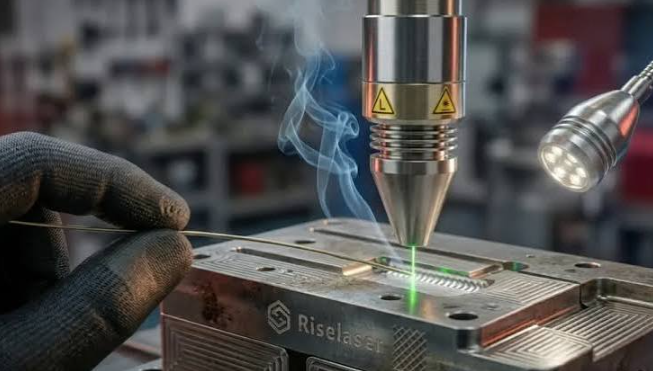
Laser welding concentrates energy into a localized area. Under suitable conditions, this can help repair small features while limiting the size of the heat-affected region compared with some alternative methods.
However, the final result depends on the process parameters, material properties, geometry, and operator skill. Laser welding does not eliminate the need for thermal control or post-weld inspection.
QCW laser systems deliver energy in controlled pulses. This operating mode may be useful for applications that require carefully managed heat input, including selected mold-repair tasks.
Compare Equipment Specifications
When comparing machines, manufacturers should examine the laser’s power characteristics, pulse controls, operating range, cooling requirements, work area, and compatibility with the materials being repaired.
A qcw laser welder is one option to consider when researching equipment for precision mold restoration. Its suitability should be confirmed through the manufacturer’s technical documentation and tests on representative materials.
Businesses should also review the availability of technical support, spare parts, operator training, and maintenance services. These factors can influence the machine’s usefulness over its working life.
Prepare the Repair Area Properly
Surface preparation helps reduce the risk of welding defects. The damaged area should be cleaned using an appropriate procedure, and the technician should determine whether the defect needs to be opened, shaped, or otherwise prepared.
Filler material, if required, should be selected for compatibility with the base material and the desired mechanical and finishing properties.
Before working on a valuable mold, technicians should validate the process on suitable test material where practical. This allows them to evaluate the weld bead, penetration, and surrounding surface before committing to the final repair.
Control Heat and Distortion
Mold geometry can be sensitive to temperature changes. Excessive heat may affect dimensional accuracy, surface hardness, or other material properties.
Operators should use validated parameters and follow the approved repair procedure. Depending on the component, temperature management, controlled sequencing, or additional post-weld treatment may be necessary.
After welding, the component may require machining, grinding, polishing, or another finishing process. The required finish should be established before the repair begins so that the welding process can be planned accordingly.
Inspect the Completed Repair
Visual inspection can identify some surface defects, but additional methods may be necessary depending on the component’s function and the consequences of failure.
Inspection criteria should address the repaired area’s geometry, surface finish, and any relevant material or structural requirements. Critical molds may need dimensional checks or other testing before returning to production.
Repair records should document the defect, materials used, process settings, inspection results, and any follow-up work. These records can help technicians improve consistency across future repairs.
Build Safety Into the Workflow
Laser welding requires a controlled work environment. The workshop should implement safeguards appropriate to the equipment’s laser classification and operating instructions.
Depending on the setup, controls may include protective enclosures, restricted access, suitable eye protection, fume extraction, electrical safety measures, and training for operators.
Personnel should also understand the hazards associated with hot components and any cleaning or finishing chemicals used during repair.
Consider the Total Cost of Repair
Equipment selection should account for more than the purchase price. Relevant factors include installation, training, consumables, maintenance, energy use, repair time, finishing labor, and the value of molds that can be restored successfully.
A trial program can help establish whether the process reduces downtime or improves repair consistency. Businesses should use measurable results rather than assuming that new technology will automatically produce savings.
Conclusion
Accurate mold maintenance depends on careful defect assessment, suitable equipment, controlled welding, and reliable inspection. QCW laser technology may offer benefits for selected precision repairs, but its suitability must be verified for each material and application.
A structured repair process helps manufacturers protect valuable tooling, maintain dimensional requirements, and make informed decisions about equipment investment.