Buying a Home in Wales in 2026: The Costs to Budget For Before You Make an Offer
Falling for a stone cottage in Pembrokeshire or a Victorian terrace in Cardiff is the easy part. Working out the true cost is where plenty of buyers come unstuck, because Wales sets its own rules.
Here is some welcome news. The average Welsh property sold for £215,000 in July 2026, according to HM Land Registry, which sits below the price where tax begins for most home movers.
The catch? The rules for Land Transaction Tax in Wales shift sharply once you already own a home, buy alongside a parent, or stretch beyond £225,000. This guide walks you through every cost worth planning for, so your budget holds firm from offer to keys.
Key Takeaways
- Homes up to £225,000 attract no Land Transaction Tax if you own no other property.
- Wales gives first-time purchasers no discount, so every main home uses identical rates.
- Owning another home triggers higher rates, starting at 5% from the very first pound.
- Your conveyancer must file and pay the tax inside a 30 day window after completion.
- Budget separately for legal fees, surveys, mortgage costs and moving day.
What Is Land Transaction Tax and Who Pays It?
Land Transaction Tax (LTT) is the tax a buyer pays when purchasing property or land in Wales above a set price. It replaced Stamp Duty Land Tax on 1 April 2018, and the Welsh Revenue Authority (WRA) collects it for the Welsh Government.
LTT is self assessed, so the buyer carries legal responsibility for an accurate return. In practice, your solicitor or conveyancer files it and pays the bill from your funds.
| No first-time buyer relief: Unlike England and Scotland, Wales has no reduced rate for people buying their first home. Your first purchase is taxed exactly like any other main residence. |
Current LTT Rates for Main Homes in 2026
Main residential rates apply when the property will be the only home you own after completion. These rates have been in place since 10 October 2022, and the Welsh Government confirmed they would stay unchanged for 2026 to 2027.
| Portion of the purchase price | Main residential rate |
|---|---|
| Up to £225,000 | 0% |
| £225,001 to £400,000 | 6% |
| £400,001 to £750,000 | 7.5% |
| £750,001 to £1,500,000 | 10% |
| Over £1,500,000 | 12% |
You pay each rate only on the slice of the price that falls inside that band. A home bought for £280,000 attracts 6% on the £55,000 above the threshold, giving a bill of £3,300.
You can check every figure against the official rates and bands published by the WRA, which also lists earlier rates for older purchases.
See also: Mutf_In: Sbi_Life_1d4zdz0
How Wales Compares With England
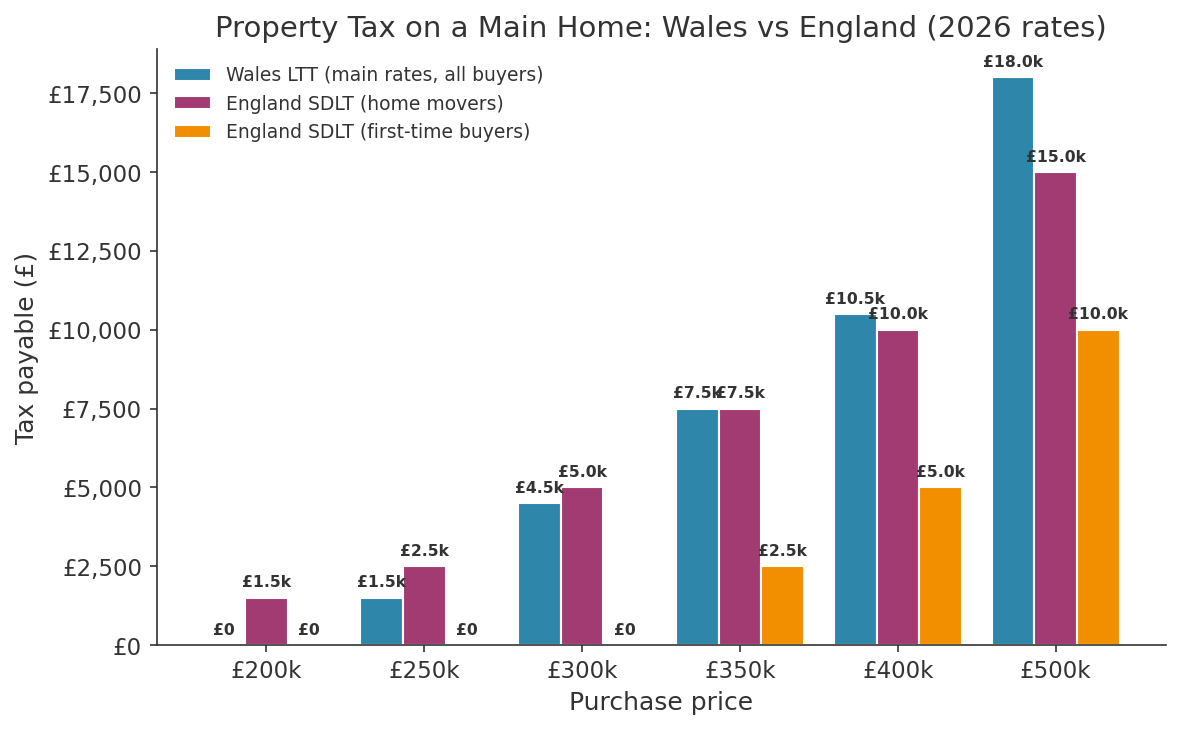
England’s stamp duty starts at £125,000 for most movers, while first-time buyers there pay nothing up to £300,000. That creates a mixed picture for anyone weighing a move across the border.
Figure 1: Tax on a main home at different prices, using rates in force in October 2026. Calculated from WRA and GOV.UK published bands.
- Below £350,000, a home mover pays less tax in Wales than in England.
- Above that point, the Welsh bill grows faster and overtakes the English figure.
- Buyers getting onto the ladder in England usually pay less, thanks to relief Wales does not offer.
At £215,000, the typical Welsh home now sits £10,000 under the point where main rate LTT begins.
Prices are moving, though. The latest UK House Price Index figures for Wales show average values rose 2.6% in the year to July 2026, so a home sitting just under the threshold today may not stay there.
Higher Rates: When Owning Another Home Changes Everything
You pay higher residential rates if you buy a home worth £40,000 or more and already own at least one other residential property. The Welsh Government raised these rates by one percentage point from 11 December 2024, and they now start at 5% on the first pound.
| Portion of the price | Main rate | Higher rate |
|---|---|---|
| Up to £180,000 | 0% | 5% |
| £180,001 to £225,000 | 0% | 8.5% |
| £225,001 to £250,000 | 6% | 8.5% |
| £250,001 to £400,000 | 6% | 10% |
| Over £400,000 up to £750,000 | 7.5% | 12.5% |
| Over £750,000 up to £1.5m | 10% | 15% |
| Over £1,500,000 | 12% | 17% |
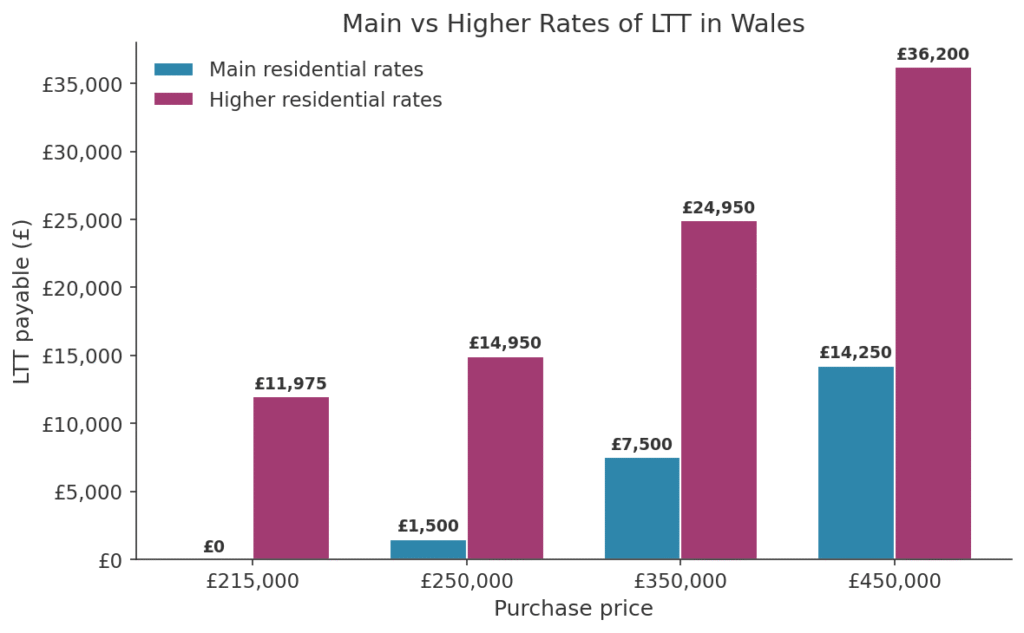
Figure 2: The same property can cost tens of thousands more in tax at higher rates.
Three Situations That Catch Buyers Out
- Buying before you sell. Completing on a new main home while you still own the old one means paying higher rates upfront. Sell your previous home within three years and you can usually claim back the difference.
- Buying with a parent. If a parent who owns their own home goes on the title deeds with you, the purchase is likely to be taxed at higher rates. With family help now essential for many first-time buyers, this trap is more common than you might think. A joint borrower, sole proprietor mortgage can sidestep it, because the parent is not a legal owner.
- Being married or in a civil partnership. The WRA treats spouses and civil partners as one unit. If either of you owns property, higher rates can apply even when only one name appears on the deeds. It belongs on the list of money conversations couples often skip before moving in together.
| Cash flow warning: On a £350,000 main home, main rates cost £7,500 but higher rates cost £24,950. If your old home has not sold, you need that extra £17,450 at completion and must wait for the refund. |
Deadlines and Paperwork You Cannot Ignore
The LTT return and payment must reach the WRA within 30 days of the day after completion. England gives buyers 14 days for stamp duty, so Wales offers a little more breathing room, yet a missed deadline can still bring penalties.
Your conveyancer will ask you for:
- Details of any residential property you, your spouse or your civil partner own
- Confirmation of whether you are replacing your main residence
- Cleared funds for the tax before the completion date
| Pro Tip: Looking near the border? Use the WRA postcode checker. Land in Wales pays LTT, while any part of a plot in England falls under stamp duty instead. |
Good communication matters once that 30 day clock starts. David P., who bought through Williams & Goodwin’s Llangefni office on Anglesey, said in a March 2025 review on The ESTAS that his purchase had a bumpy start. He credited the team for keeping him informed and answering questions before he thought to ask them, the kind of support that keeps deadlines on track.
The Other Costs of Buying a Home in Wales
LTT is often the largest single fee, yet it is far from the only one. Build these into your plan early:
| Cost | When you pay | Budget tip |
|---|---|---|
| Solicitor or conveyancer fees | On completion | Ask for a fixed fee quote listing every disbursement |
| Property searches | Early in conveyancing | Usually shown as disbursements in your legal quote |
| Survey | Before exchange | Choose a fuller survey for older or rural homes |
| Mortgage arrangement and valuation fees | At application or completion | Compare the total cost of a deal, not just its rate |
| HM Land Registry fee | After completion | Your conveyancer pays it to register your ownership |
| Removals and setup | Moving week | Book early if you are moving on a Friday or in summer |
Once you have a total, protect it. Small treats while you wait for completion add up quickly, and habits such as doom spending can quietly drain a moving fund.
Smart Ways to Keep Your Purchase Costs Down
A few early decisions can save you hundreds, sometimes thousands, of pounds:
- Negotiate around the threshold. Agreeing £225,000 instead of £230,000 cuts the price and saves £300 in tax.
- Sell first where possible, or set aside cash to cover higher rates until your refund arrives.
- Check the ownership structure before a parent or partner joins the title deeds.
- Use the WRA calculator with your expected completion date, since rates depend on that date.
- Secure a mortgage agreement in principle so you can move quickly on the right home.
Frequently Asked Questions
Do first-time buyers have to pay LTT?
Yes, if the price exceeds £225,000. Wales offers no special relief for a first purchase, so it follows the same main rates as any other move. Anyone who owns no other property pays nothing on homes priced at £225,000 or less.
How much LTT will I pay on a £250,000 house?
At main rates you pay £1,500: nothing on the first £225,000 and 6% on the remaining £25,000. If higher rates apply because you already own property, the bill on that same house rises to £14,950.
Can I claim LTT back if I sell my old home later?
Usually, yes. If you paid higher rates because your previous main home had not sold, and you sell it within three years of buying the new one, you can apply to the WRA for the difference between higher and main rates.
Who pays LTT, the buyer or the seller?
The buyer pays. Your legal adviser normally submits the return and sends payment for you, using money you transfer ahead of completion. Sellers carry no LTT liability when they sell their home in Wales.
Is LTT cheaper than stamp duty in England?
For a home mover buying below £350,000, LTT is lower than English stamp duty, and the two match at that price. Above it, Wales costs more. English first-time buyers enjoy a £300,000 nil rate band, so they often pay less there.
Planning Your Move With Confidence
Buying in Wales rewards people who plan ahead. Many home movers pay no tax at all, while second home buyers and families buying together face a far larger bill. Confirm your rates before you offer, keep cash ready for the deadline, and budget for fees beyond the tax itself.
After the keys are yours, take a moment to update your paperwork too, because the essential family documents many people forget to review deserve a fresh look after any big purchase.
References
Welsh Revenue Authority, Land Transaction Tax rates and bands, updated December 2024: https://www.gov.wales/land-transaction-tax-rates-and-bands
Welsh Revenue Authority, Higher rates of Land Transaction Tax: overview, updated August 2025: https://www.gov.wales/higher-rates-land-transaction-tax-overview
Welsh Government, Written Statement: Draft Budget 2026 to 2027: Welsh Taxes, October 2025: https://www.gov.wales/written-statement-draft-budget-2026-27-welsh-taxes
HM Land Registry, UK House Price Index Wales: July 2026: https://www.gov.uk/government/statistics/uk-house-price-index-for-july-2026/uk-house-price-index-wales-july-2026
GOV.UK, Stamp Duty Land Tax: residential property rates, 2026: https://www.gov.uk/stamp-duty-land-tax/residential-property-rates
Fact Check: All statistics and data points in this article were verified against original sources as of 9 October 2026. Sources are listed in the References section.