Important Factors When Planning an Automated Cutlery Packaging Line
Introduction
Manufacturers of disposable and reusable cutlery must balance packaging speed, product presentation, hygiene, and operational consistency. Whether a facility packages forks, spoons, knives, or complete cutlery sets, the process needs to protect products while preparing them for storage, shipping, or retail display.
Automation can help manage repetitive handling and improve coordination between production stages. However, a successful packaging line depends on much more than installing a machine. Businesses must understand their products, packaging materials, production targets, and maintenance requirements before choosing an automated solution.
Understand the Packaging Workflow
The first step is to map the existing process. A typical operation may involve receiving cutlery, counting or grouping pieces, arranging them in a specific orientation, inserting them into packaging, and preparing the finished packs for cartons.
The exact workflow varies according to the product. A package containing one utensil may require a different process from a set containing several pieces. Packaging material, product dimensions, and the desired arrangement all influence the machinery needed.
Documenting each stage helps manufacturers identify delays and unnecessary handling. It also shows where automation could provide the greatest benefit.
Define Production Requirements
Before comparing equipment, estimate the normal and peak production volumes. Include expected product changes, cleaning periods, staff breaks, and routine maintenance in the calculation.
Maximum machine speed can be useful as a reference, but it does not represent the complete output of a factory line. Real production may be affected by material feeding, product alignment, package sealing, rejected items, and interruptions in other machines.
A balanced line should allow each stage to operate at a compatible rate. If one process is significantly slower than the others, it can limit the output of the entire system.
Evaluate Product Handling
Cutlery may vary in size, shape, weight, and material. Plastic, wood, and metal utensils can have different handling requirements, so the automation system must be configured for the products being processed.
Feeding mechanisms should deliver items consistently, while sensors or counting arrangements may help verify the intended number of pieces in each pack. The packaging method must also accommodate the utensil shape without causing unnecessary movement or damage.
When several products share one production line, changeover procedures become important. Manufacturers should ask how quickly the equipment can be adjusted and which components need to be replaced for a new product format.
Choosing the Right Automation Equipment
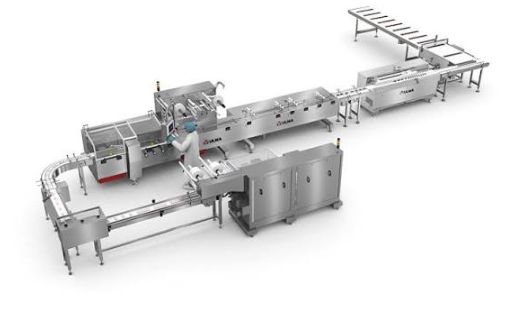
Automation options range from dedicated packaging machines to integrated systems that combine feeding, sorting, packing, and conveying. A suitable solution depends on the required functions and the level of flexibility needed.
A food packaging robot may be relevant when robotic handling can improve the movement or placement of products within the line. Buyers should confirm the system’s actual capabilities, supported product sizes, operating speed, and compatibility with existing equipment.
Important questions include:
- Which product types and dimensions are supported?
- What packaging materials can be handled?
- How are missing or misaligned products detected?
- What safety features are included?
- How are faults reported and cleared?
- What maintenance and spare parts are required?
Clear answers help prevent mismatches between equipment capabilities and production needs.
Hygiene, Safety, and Quality Control
Packaging equipment should be appropriate for the environment in which it will operate. Manufacturers must review material suitability, cleaning access, dust control, and any hygiene requirements relevant to their products and packaging process.
Machine guarding and emergency-stop arrangements are also essential. Operators should receive training on safe operation, cleaning, jam removal, and maintenance procedures. Tasks involving access to moving machinery should follow the manufacturer’s safety instructions and the facility’s lockout procedures.
Quality control may include checking package counts, seals, labels, and product presentation. Automated inspection can support these checks where suitable, but its effectiveness depends on system design and validation.
Consider Installation and Maintenance
The installation plan should account for available floor space, power requirements, conveyor layout, operator access, and connection to existing controls. Businesses should also consider how production will be affected during installation and commissioning.
Preventive maintenance can reduce unexpected interruptions. Ask the supplier for recommended service intervals, lubrication requirements, wear components, and troubleshooting guidance.
Availability of technical support may be especially important for facilities with demanding production schedules. The purchase price should therefore be compared with the expected cost of ownership over the equipment’s useful life.
Conclusion
Planning an automated cutlery packaging line requires a clear understanding of products, packaging formats, output requirements, and operating conditions. Automation can improve consistency, but the equipment must fit the entire workflow.
By assessing product handling, safety, quality control, integration, and maintenance in advance, manufacturers can make better decisions and develop a packaging process suited to their production goals.