How Interactive Educational Toys Can Support Everyday Learning
Introduction
Children learn through a combination of observation, exploration, conversation, movement, and play. Toys can provide opportunities to practise these activities in an enjoyable setting, especially when they encourage children to participate rather than simply watch. Interactive toys may respond to a child’s actions through movement, sounds, lights, puzzles, or other forms of feedback.
The value of a toy depends less on how many features it contains and more on whether those features suit the child’s developmental stage and interests. Parents, caregivers, and educators can make better choices by looking at the learning opportunities, safety, durability, and flexibility of each product.
What Makes a Toy Interactive?
An interactive toy invites the child to do something and respond to the result. A simple shape sorter, for example, encourages children to match objects with openings. A puzzle may provide feedback when pieces are placed correctly. Electronic toys may include buttons, sound prompts, or activities that respond to movement.
Not every useful interactive toy needs batteries or a digital screen. Blocks, matching games, and hands-on construction sets can also encourage active participation. In many situations, open-ended toys are valuable because they allow children to invent different ways to play instead of following a single sequence.
When evaluating a toy, ask whether the child will make decisions, solve problems, explore possibilities, or create something. These features can be more meaningful than lights and sounds alone.
Match Toys to Age and Ability
Age recommendations provide a starting point, but children’s interests and abilities also vary. Younger children may benefit from toys with large pieces, simple cause-and-effect activities, and easy-to-understand instructions. Older children may enjoy construction challenges, logic puzzles, strategy games, or activities that combine several skills.
Safety must remain a priority. Check for small parts that could pose choking hazards, accessible batteries, sharp edges, loose components, and materials that may not be appropriate for the intended age group. Follow all manufacturer warnings and inspect toys regularly for damage.
A toy should offer an achievable challenge without becoming so difficult that the child loses interest. Adults can adjust the activity by introducing one step at a time, demonstrating a technique, or encouraging the child to try a different approach.
Learning Through Play
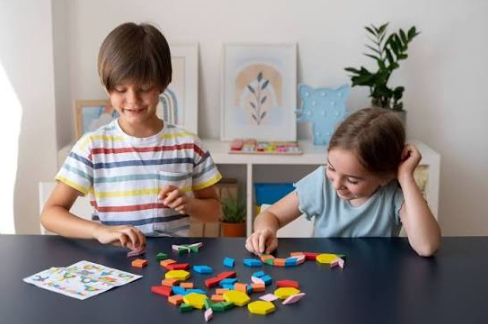
Interactive play can create opportunities to explore early concepts such as counting, colors, shapes, sequencing, and spatial relationships. Building toys can encourage children to compare sizes and test how structures fit together. Matching games can introduce categories and visual recognition.
Pretend-play toys can also support storytelling and communication. A child using toy food, vehicles, or figures may invent situations, assign roles, and explain what is happening. Adults can extend the activity by asking open-ended questions rather than controlling every step.
These activities are most useful when they remain enjoyable and age-appropriate. A toy alone cannot guarantee academic progress, and children benefit from a varied environment that includes conversation, books, outdoor activity, and creative play.
Balancing Digital and Hands-On Features
Electronic toys can offer feedback and structured challenges, but parents should consider how they fit into the child’s broader routine. Look for clear controls, reasonable sound levels, accessible settings, and a design that does not rely on constant stimulation.
Hands-on activities remain important because they allow children to manipulate objects, test ideas physically, and interact directly with other people. A balanced toy collection may include electronic games alongside building blocks, art supplies, books, and imaginative-play materials.
Caregivers can also join the activity. Playing together creates opportunities to model problem-solving, encourage language, and help children handle frustration when a challenge proves difficult.
Choosing Products for Home, School, or Retail
Parents may prioritize safety, durability, and a child’s interests. Schools and childcare providers may need products that can withstand repeated use, are easy to clean, and support group activities. Retailers should consider packaging, clear age labels, product descriptions, and customer expectations.
Businesses researching interactive educational toys can compare available categories and review which products suit their intended customers. Before placing a large order, buyers should confirm material information, safety documentation, shipping details, minimum order quantities, and after-sales arrangements.
A clear product description helps customers understand what the toy does and what is included in the package.
Conclusion
Interactive educational toys can make play more engaging by giving children opportunities to explore, experiment, and solve problems. The most suitable choices match the child’s age, interests, and abilities while maintaining appropriate safety standards.
By focusing on meaningful interaction rather than the number of features, families, educators, and retailers can choose toys that fit naturally into a balanced learning and play environment.